
What the CHEK Institute and Integrated Movement Science Actually Taught Me
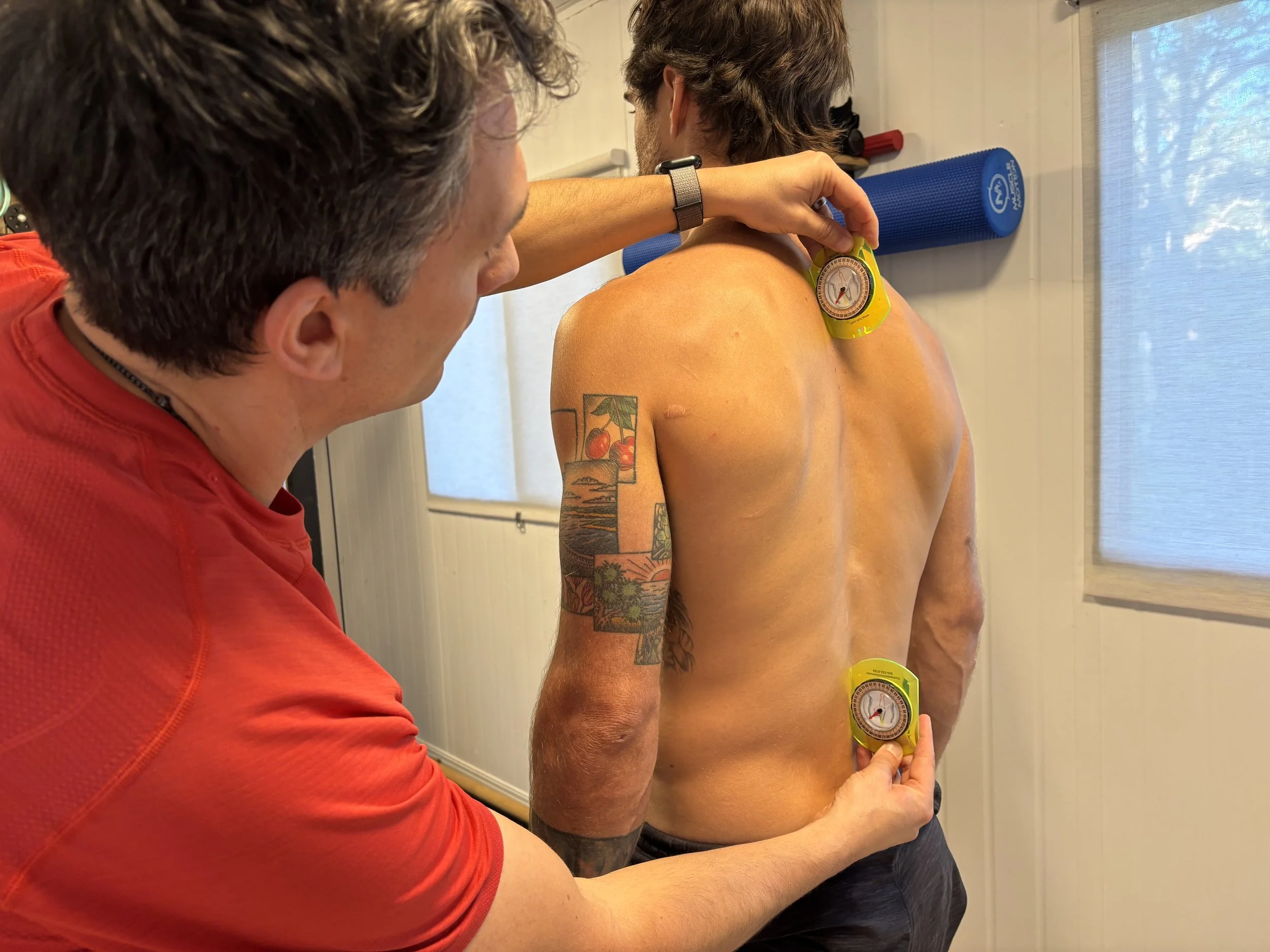
Oier assessing the thoracic curvature of a client.
You can't out-treat a lifestyle problem with a pill.
That's the short version of the biggest thing 12 years of studying with the CHEK Institute has taught me. Here's the longer version.
The human body is always trying to heal itself, always trying to get back to balance. And it's constantly sending signals about what it likes and doesn't like. If you listen to those small signals and respond to them, you can stay in a genuine state of health.
If you don't listen, the body makes bigger noise. That bigger noise is what we call a symptom.
Most of the medical system treats symptoms separately, as if the symptom itself is the problem. But a symptom is just the body's way of turning up the volume on something you've been ignoring. By the time a symptom shows up, there's usually more going on than just the part of the body that's complaining. It means smaller signals were missed for a while.
The medical system usually responds with medication, to mask the symptom rather than get to what caused it, and to understand what signals were ignored in the first place so the body can actually be brought back into balance.
I want to be clear, the medical system is genuinely helpful, especially for acute problems. Broken bones. Car accidents. Emergencies. It thrives there. But most chronic disease today doesn't come from acute events. It comes from lifestyle, from the accumulation of everyday choices.
This is essentially what Paul Chek, drawing from Hippocrates, calls the Four Doctors you’ll ever need: Dr. Happy, Dr. Diet, Dr. Movement and Dr. Quite. If you listen to them and keep them in balance within your body, you give yourself a real shot at true health.
Integrated Movement Science taught me something just as important, but about the body specifically. No one has a perfect posture. Every part of our lifestyle influences it. But the better your posture, the lower your chances of injury.
If you move through life, or especially if you play sport or do anything physically demanding, while carrying bad posture, you're not just staying the same. You're actively amplifying your imbalances. Over time, that catches up with you, sometimes as an injury serious enough to need surgery, sometimes as damage it's too late to fully correct.
That's what gave me a real appreciation for posture, and it's what taught me how to build exercise programs that don't just correct imbalances, but help a body genuinely thrive in whatever it's asked to do.