
The silent killer in your office chair
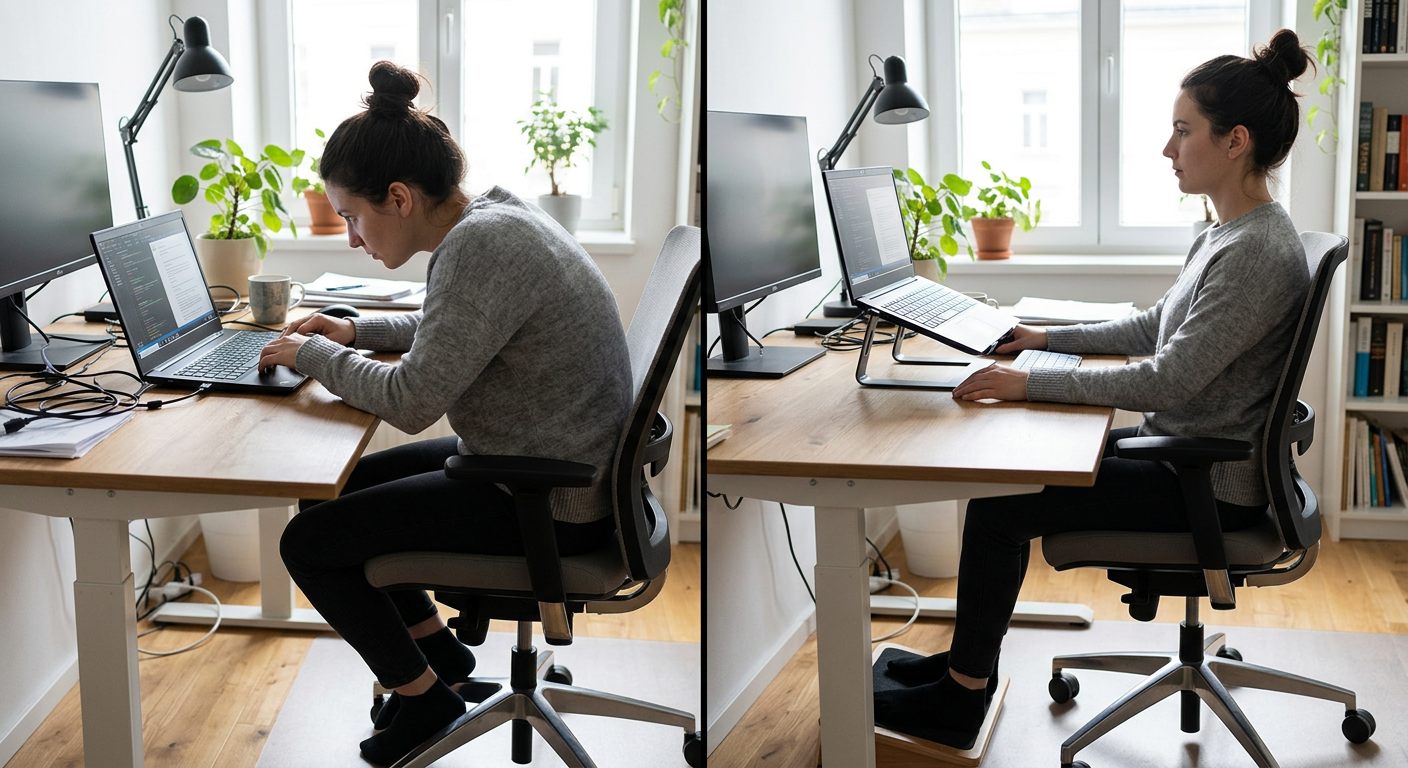
Most back pain isn't caused by a bad injury or bad luck. It's caused by something far more ordinary: sitting still for too long, for too many years.
If you work in an office or even from home, there's a good chance you spend 8 or more hours a day in a chair. And your body, which evolved to move constantly throughout the day, is paying a quiet but very real price.
WHAT ACTUALLY HAPPENS WHEN YOU SIT FOR HOURS
The human body is designed for variety: standing, walking, squatting, reaching, twisting. When you remove that variety and replace it with hours of static sitting, several things start happening beneath the surface.
Your hip flexors, the muscles at the front of your hips, shorten because they're held in a flexed position all day. Over time, this tightness pulls on your lower back and changes how your pelvis sits, creating chronic tension.
Your glutes, which are meant to be your primary movers and stabilisers, essentially "switch off" from lack of use. This is sometimes called gluteal amnesia. The muscles are still there, but your brain stops effectively recruiting them.
Your upper back rounds forward, your shoulders roll in, and your neck pushes forward to compensate. The posture most people now associate with "just how I sit," without realising it's a learned pattern, not a fixed trait.
YOUR BRAIN STARTS THINKING THIS IS NORMAL
Here's the part most people don't realise: your nervous system adapts to whatever position you spend the most time in. If you sit slouched for 8 hours a day, your brain begins to treat that slouched position as your baseline "neutral." This is why simply telling yourself to "sit up straight" rarely works for long. T=You're fighting against a deeply wired pattern, not just a bad habit.
Then you stand up after a long day, and suddenly your lower back aches, your hips feel tight, and your shoulders are sore. This isn't random wear and tear. It's the direct, predictable result of the position your body has been locked into.
BUT HERE'S THE THING: MOST OF THIS IS REVERSIBLE
The good news is that the human body is remarkably adaptable in both directions. Just as it adapted to sitting, it can re-adapt to movement, with the right approach.
This isn't about forcing yourself through painful stretches or buying an expensive standing desk and hoping that fixes everything. It's about understanding your specific compensation patterns: which muscles have shortened, which have switched off, and how your particular posture has developed and addressing them systematically.
Real movement correction looks at your whole system: how you sit, how you stand, how you breathe, and how those patterns interact. It's not a five-minute fix, but it is absolutely achievable.
If you've normalised back pain, stiffness, or that "I just need to stretch more" feeling it's worth understanding what's actually happening, rather than continuing to manage the symptoms.
📩 Get a Free consultation: argiaholisticcoaching.com.au