
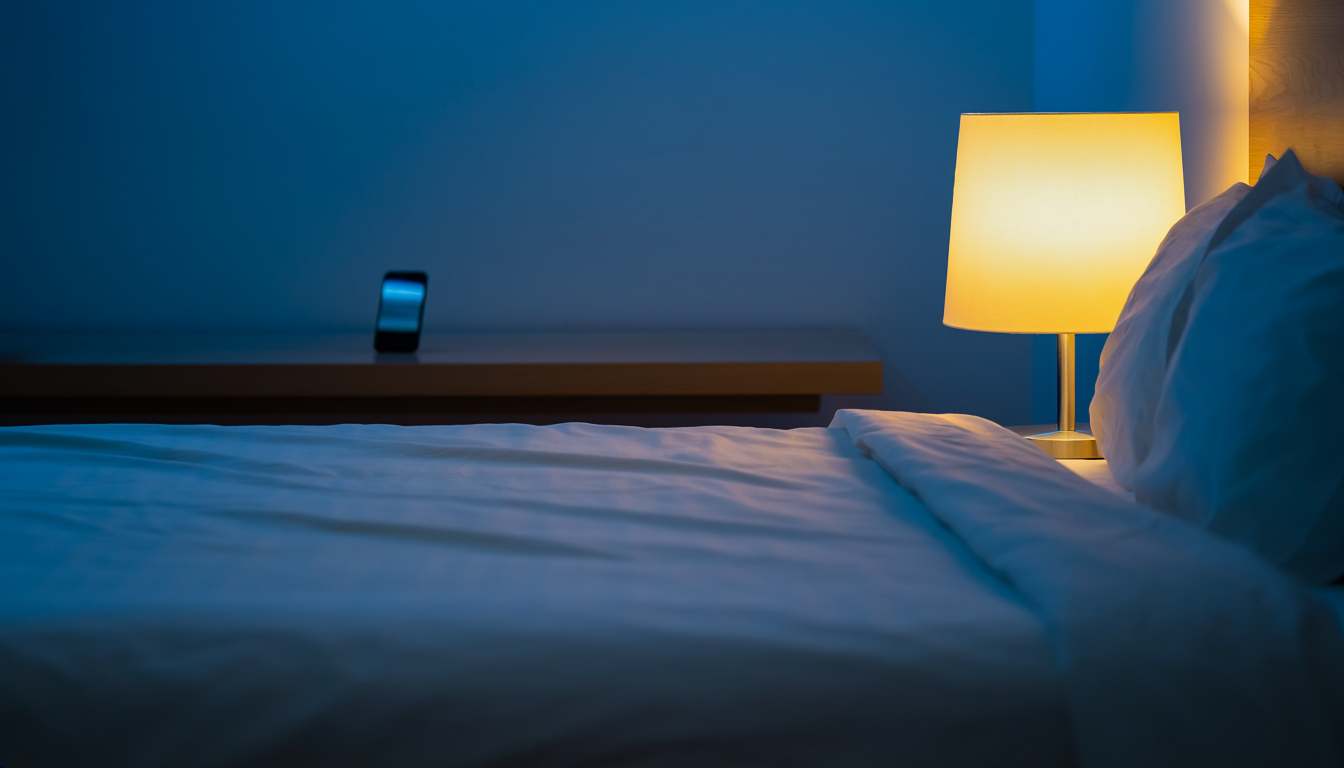
Ask most stressed professionals about their sleep and you'll hear the same thing. "I get my seven or eight hours, mostly." Sleep has become a number. Hours in, hours out.
People are more aware of how important sleep is these days, and that's a good thing. But knowing and doing are two different things. We know sleep matters, and we still trade it away almost every day. I include myself in that group. After many years of studying this, there are still nights I go to bed later than I should, or skip my wind down routine.
Here's what I think gets missed. Sleep has two sides: quantity and quality. And inside quantity, there's something people forget: timing.
HOW LONG IS NOT ENOUGH ON ITS OWN
Around eight hours is a good target for most adults. But your body runs on a circadian rhythm, a clock that follows the light of the sun. It expects you to be asleep when it's dark.
The way I was taught through the CHEK Institute, roughly 10pm to 2am is when the body does most of its physical repair. From about 2am to 6am, the brain takes over, sorting memories and storing information. Sleep research backs the general pattern: the deepest, most physically restoring sleep comes in the first half of the night, and the dream sleep that supports memory and emotions comes more in the second half.
So eight hours from 1am to 9am is often not the same as eight hours from 10pm to 6am.
I know this from my own life, not just from books. On a recent trip home to Spain, I sat down to dinner at 11pm and got to bed at 12:45. I slept eight and a half hours and woke up lethargic, a bit unwell, with a small headache. Plenty of hours, and I still felt wrecked.
When I think about all the nights I spent in bars and clubs when I was young, I do wonder what that cost my body.
HOW YOU GO TO BED MATTERS TOO
You can be in bed at the right time and still not sleep well.
Stressed professionals are often the ones who find it hardest to switch off. They go to bed thinking about work and what tomorrow will bring, then wake up and the first thing they do is check the phone for emails. The brain never really gets a break from the day.
To switch off, a lot of people reach for whatever feels easy: a movie, a series, a late snack, a bit more scrolling. The problem is that most of these keep your system on alert. A violent film, a money worry or a work problem going round and round all tell your body it isn't time to let go. The temperature of the room matters too, and so does your ability to disconnect from the day before you lie down.
THE HARDEST ONE: SCREENS
Almost everyone knows this one, and almost nobody wants to hear it. Screens, whether it's the TV, the iPad or the phone in your bed, send light to your eyes that tells your brain it's still daytime. That can delay the release of melatonin, the hormone that tells your body it's time to rest. You keep giving your body the signal to stay awake right up to the moment you close your eyes.
WHAT I'D DO INSTEAD
Pick a bedtime close to 10pm and protect it like a meeting.
Switch screens off earlier than you think you need to, ideally an hour before bed, and keep them out of bed.
Write down what's on your mind and tomorrow's to do list, so it stays on paper and not in your head.
Keep the room cool and dark.
Give yourself a few minutes in the morning before you open your inbox.
I'm not perfect at this, and some nights I get it wrong. But when I protect my sleep window, the next day feels completely different. It's one of the first things I look at with every new client, because energy, mood and stress all get easier when sleep is solid.
If your sleep is something you keep promising to fix, let's talk about a routine that actually fits your life.