
Great Diet. Good Sleep. Still Tired? You're Missing 4 Other Foundations.
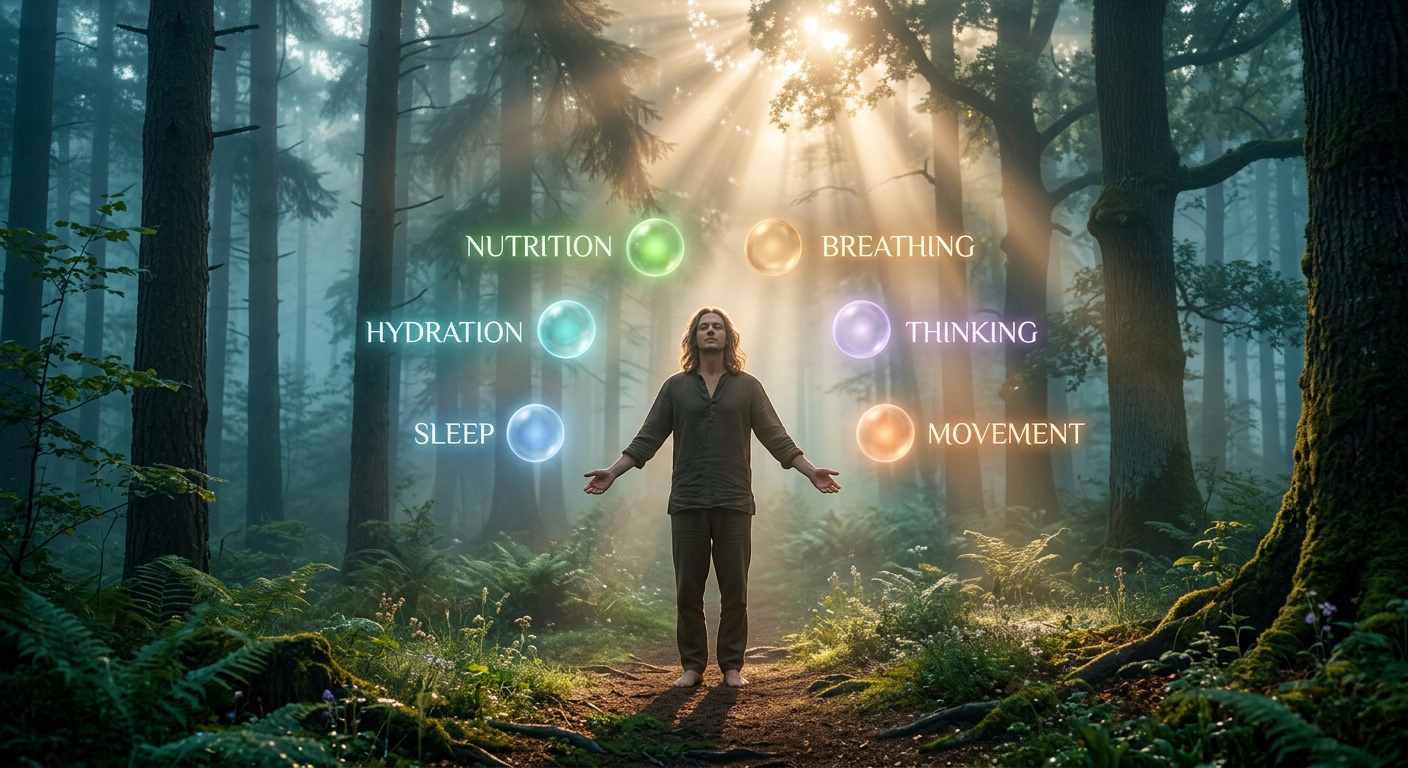
Most health advice focuses on one thing at a time. One supplement. One diet. One exercise plan. Walk into most medical appointments and you'll likely get advice focused on a single issue — which makes sense for acute problems, but falls short when it comes to actually feeling well.
Your body doesn't work in isolation. It works as a system. And real, sustainable health requires all six foundations to be in place at once: sleep, hydration, nutrition, movement, breathing, and thinking.
This isn't a wellness trend — it's the foundational framework I use with every client, drawn from years of study with the CHEK Institute. Let's go through each one.
1. SLEEP
Sleep is the foundation that everything else depends on. During deep sleep, your body repairs tissue, consolidates memory, regulates hormones, and clears metabolic waste from the brain. Poor sleep doesn't just make you tired — it undermines your ability to manage stress, regulate appetite, and recover from physical and mental exertion. No amount of effort in the other five areas fully compensates for chronically poor sleep.
2. HYDRATION
Most people walk around mildly dehydrated without realising it. Even a 1-2% drop in hydration measurably affects cognitive function, mood, and energy levels. Hydration also affects digestion, joint health, and how efficiently your cells can produce energy. It's one of the simplest foundations to address — and one of the most overlooked.
3. NUTRITION
This isn't about following a specific diet. It's about whether the food you're eating actually gives your body what it needs to repair, produce energy, and function well. Quality matters more than rigid rules. Real, whole foods, eaten in a way that supports your individual needs and stress levels, will always outperform a "perfect" diet plan followed under chronic stress.
4. MOVEMENT
Movement is broader than exercise. It includes how you move throughout your entire day — not just the 45 minutes you might spend at the gym. The human body is designed for varied movement: walking, reaching, twisting, squatting, carrying. A sedentary day followed by a single workout doesn't fully offset the hours of stillness in between.
5. BREATHING
Most adults breathe in a shallow, chest-based pattern that keeps the nervous system in a low-grade stress state, often without any awareness of it. Proper diaphragmatic breathing activates the parasympathetic nervous system — your body's rest-and-recovery mode — and has measurable effects on stress hormones, heart rate variability, and overall resilience.
6. THINKING
Your psychology and your physiology are not separate. Chronic negative thinking, unprocessed stress, and unclear values create real physiological strain — affecting hormone levels, immune function, and inflammation. This foundation is often the most neglected, yet it influences how effectively the other five can actually work.
WHY THIS MATTERS
Most health advice addresses one or two of these foundations, leaving the others unaddressed. You can have great nutrition and still struggle with energy if your breathing pattern keeps you in chronic stress. You can exercise diligently and still feel exhausted if your sleep is compromised.
Real change happens when you understand your own system: which foundations are solid, which are weakest, and how they're affecting each other. That's where sustainable health actually begins.